
Aronofsky AI Revolution: Witness the American Revolution Reimagined in 2024
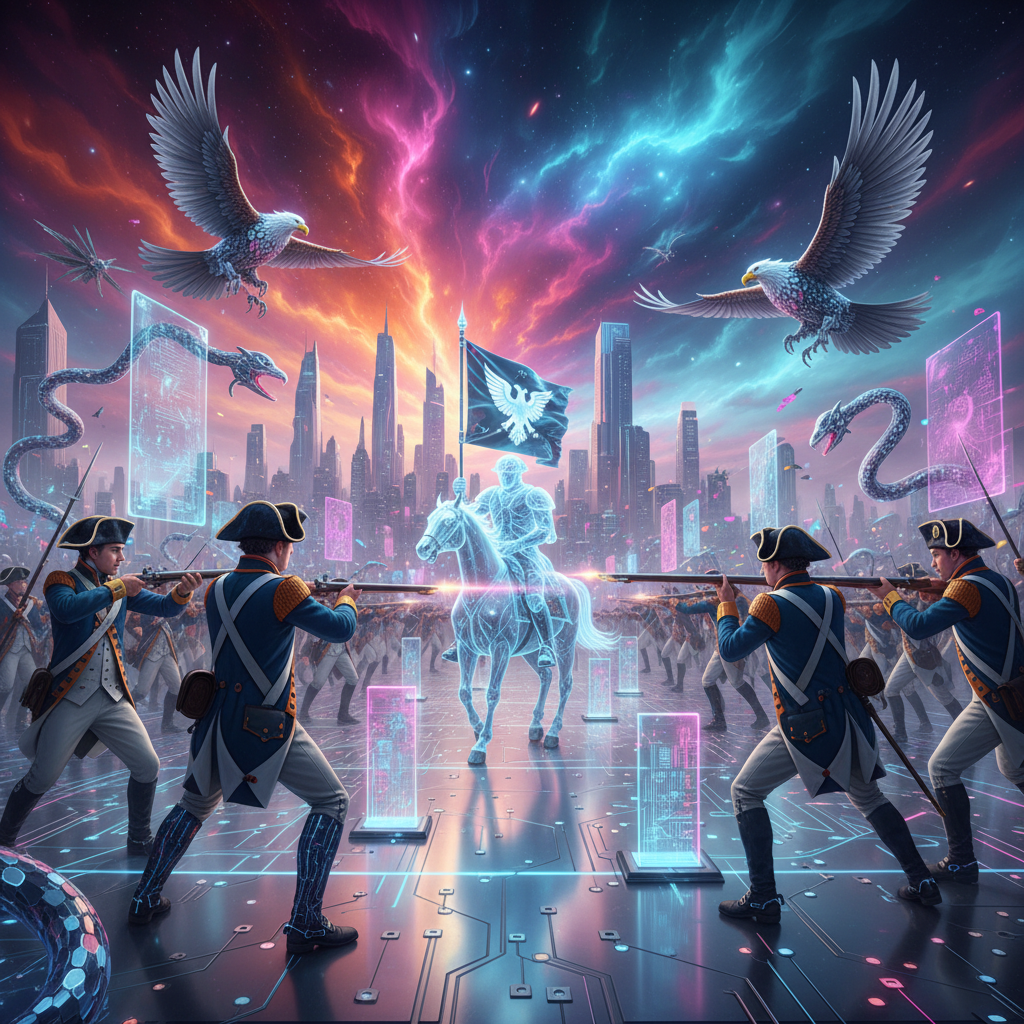
Aronofsky AI Revolution: Witness the American Revolution Reimagined in 2024
Darren Aronofsky, the director known for his visually stunning and psychologically intense films like Requiem for a Dream and Black Swan, is embarking on a groundbreaking project that blends historical narrative with cutting-edge technology. The Aronofsky AI Revolution is here, and it’s taking the form of a short film series titled ‘On This Day… 1776’, an ambitious endeavor set to reimagine the American Revolution through the lens of artificial intelligence.
This project marks a significant departure for Aronofsky, known for his practical effects and deep character studies. The use of AI in filmmaking, particularly for a historical subject, raises exciting possibilities and some important questions about the future of the industry.
Featured Snippet: ‘On This Day… 1776’ is Darren Aronofsky’s new AI generated film series depicting key moments of the American Revolution. This Darren Aronofsky project utilizes AI film generation techniques to recreate historical scenes, raising questions about the impact of AI on historical film production and the ethics of AI filmmaking.
Darren Aronofsky’s Bold Leap: Unveiling ‘On This Day… 1776’ with AI
Darren Aronofsky has consistently pushed the boundaries of cinematic storytelling. From the gritty realism of Requiem for a Dream to the ballet-infused psychological thriller Black Swan, his films are characterized by a willingness to experiment with visual style and narrative structure. This willingness to embrace innovation makes his foray into AI filmmaking a natural progression.
‘On This Day… 1776’ promises to be a unique take on a pivotal period in American history. The title itself suggests a focus on specific, impactful moments, potentially presented in an episodic format. This short film series approach allows for a deep dive into individual events, offering viewers a glimpse into the lives and decisions that shaped the nation.
The use of AI in this Darren Aronofsky project isn’t just a gimmick; it’s a fundamental aspect of the production. While specific details are still emerging, it’s likely that AI is being used for various purposes, including creating realistic historical environments, generating period-accurate costumes, and even potentially assisting with script generation. The involvement of an AI photo studio suggests a heavy reliance on AI-generated art for visual elements.
The announcement of ‘On This Day… 1776’ has been met with a mix of excitement and skepticism. While many are intrigued by the prospect of seeing the American Revolution reimagined with artificial intelligence, others are concerned about the potential for historical inaccuracies or the ethical implications of using AI in filmmaking. Regardless, the project has undoubtedly sparked a conversation about the future of cinema.
AI Generated Film: Exploring the Technology Behind ‘On This Day… 1776’
The specific AI film generation techniques employed in ‘On This Day… 1776’ are a key point of interest. It’s probable that the production utilizes a combination of image generation and video synthesis. AI models can be trained on vast datasets of historical images, paintings, and documents to create realistic depictions of 18th-century America.
One of the biggest challenges in recreating historical settings is ensuring accuracy. AI can be used to analyze historical records and architectural plans to generate accurate representations of buildings, landscapes, and even clothing. Imagine seeing Philadelphia On This Day 1776 brought to life with unprecedented detail, thanks to AI.
While AI plays a significant role, the human element remains crucial. Filmmakers, historians, and artists collaborate to guide the AI, ensuring that the final product is both visually stunning and historically accurate. AI serves as a powerful tool to augment their creativity, enabling them to realize their vision in ways that were previously impossible. This is not about replacing human creativity, but enhancing it.
The benefits of using AI in filmmaking are numerous. Reduced production costs, faster turnaround times, and the ability to create visuals that would be prohibitively expensive or impossible with traditional methods are just a few advantages. For instance, recreating large-scale battle scenes with thousands of extras is incredibly costly and logistically complex. AI can generate these scenes with far greater efficiency and realism.
American Revolution Series: Reimagining History with Artificial Intelligence Art
AI has the potential to offer fresh perspectives on historical events. By analyzing vast amounts of data and identifying patterns, AI can reveal hidden connections and offer new interpretations of the American Revolution. Could AI uncover previously overlooked factors that influenced the course of the war?
The immersive capabilities of AI-generated visuals can significantly enhance the viewer experience. Imagine watching a scene from the Revolutionary War and feeling as though you are actually there, witnessing the events unfold in real-time. This level of immersion can make history more engaging and memorable for viewers of all ages.
Maintaining historical accuracy is paramount when using AI to recreate historical events. Filmmakers must carefully curate the data used to train the AI, ensuring that it is accurate and unbiased. They must also work closely with historians to verify the AI’s output and make any necessary corrections. The goal is to use AI as a tool to enhance historical understanding, not to distort or misrepresent the past.
AI-generated films have the potential to revolutionize historical education. By creating visually stunning and engaging content, AI can make history more accessible and appealing to students. Imagine using AI to create interactive simulations of historical events, allowing students to explore different scenarios and learn about the American Revolution in a more hands-on way.
Ethical Considerations of AI Filmmaking: The Aronofsky AI Revolution Debate
The use of AI in art raises fundamental questions about originality and creativity. Are AI-generated films truly original works of art, or are they simply sophisticated imitations of human creativity? This is a complex issue with no easy answers. Some argue that AI is simply a tool, and that the creativity still comes from the human artists who guide and direct it. Others believe that AI has the potential to create truly original works of art, surpassing human capabilities.
Concerns about job displacement in the film industry are also valid. Could AI eventually replace human actors, writers, and directors? While it’s unlikely that AI will completely replace human creativity, it’s possible that it could automate certain tasks, leading to job losses in some areas. It’s important for the industry to adapt to these changes and find ways to integrate AI in a way that benefits both artists and audiences.
The potential for AI to be used to create propaganda or misinformation is a serious concern. AI-generated films could be used to manipulate public opinion, distort historical events, or spread false narratives. It’s crucial to develop safeguards to prevent the misuse of AI in this way.
Transparency and disclosure are essential when using AI in filmmaking. Viewers should be informed that a film was created using AI, so they can make their own judgments about its authenticity and accuracy. This transparency will help to build trust and ensure that AI is used responsibly. Consider the implications of an AI generated short films American Revolution project being presented as fact without disclosure.
For a deeper breakdown, explore our AI Tools Guide to see how these compare in real-world use.
—
FAQ SECTION
1. What is Darren Aronofsky’s AI series about?
Darren Aronofsky’s AI series, ‘On This Day… 1776’, is a short film series that reimagines key moments of the American Revolution using artificial intelligence. It aims to offer a unique and visually stunning perspective on this pivotal period in American history.
2. How does AI film generation work?
AI film generation typically involves training AI models on vast datasets of images, videos, and text. These models can then be used to generate new images, videos, and even scripts. In the context of ‘On This Day… 1776’, AI is likely being used to create realistic historical environments, costumes, and battle scenes.
3. Why is Darren Aronofsky using AI in filmmaking?
Darren Aronofsky is known for his innovative approach to filmmaking, and his use of AI in ‘On This Day… 1776’ reflects his willingness to experiment with new technologies. AI offers the potential to create visuals that would be impossible or prohibitively expensive with traditional methods.
4. What are the benefits of using AI in film production?
The benefits of using AI in film production include reduced production costs, faster turnaround times, the ability to create visuals that would be impossible with traditional methods, and the potential to offer new perspectives on historical events.
5. How to use an AI photo studio for historical recreations?
Using an AI photo studio for historical recreations involves providing the AI with detailed information about the historical period, including images, documents, and architectural plans. The AI can then use this information to generate realistic depictions of historical scenes, costumes, and environments. The new AI photo studio series release will likely showcase these techniques.