Aronofsky AI Revolution: Witness the American Revolution Reimagined with AI
Aronofsky AI Revolution: Witness the American Revolution Reimagined with AI
Darren Aronofsky, the visionary director behind films like “Requiem for a Dream” and “Black Swan,” is known for pushing boundaries and exploring the depths of the human psyche. Now, he’s venturing into uncharted territory with his latest Darren Aronofsky project: an AI-generated American Revolution series titled ‘On This Day… 1776’. This isn’t just another historical drama; it’s a groundbreaking exploration of how artificial intelligence art can reshape our understanding of the past. The project is already generating significant buzz, sparking conversations about the future of AI filmmaking and its potential impact on the industry. The series promises to be a unique blend of historical narrative and cutting-edge technology, potentially revolutionizing how historical events are portrayed on screen. The question on everyone’s mind is: how was Aronofsky’s series made with AI?
Featured Snippet: ‘On This Day… 1776’ is a new AI generated film series by Darren Aronofsky, depicting key moments of the American Revolution. It utilizes AI image generation techniques to create a unique visual experience, raising questions about the use of AI in historical storytelling and the future of AI filmmaking.
Darren Aronofsky’s Bold Leap: AI-Generated American Revolution Series
Aronofsky’s filmography is characterized by its intense emotional narratives and striking visual style. From the gritty realism of “The Wrestler” to the psychological horror of “Mother!”, his films often challenge audiences and provoke deep reflection. The American Revolution series represents a significant departure, venturing into historical subject matter with a technological twist. While his previous works delved into personal struggles, this project explores a pivotal moment in history through the lens of artificial intelligence. This new AI series by Darren Aronofsky is not just a film project; it’s an experiment in blending art, history, and technology.
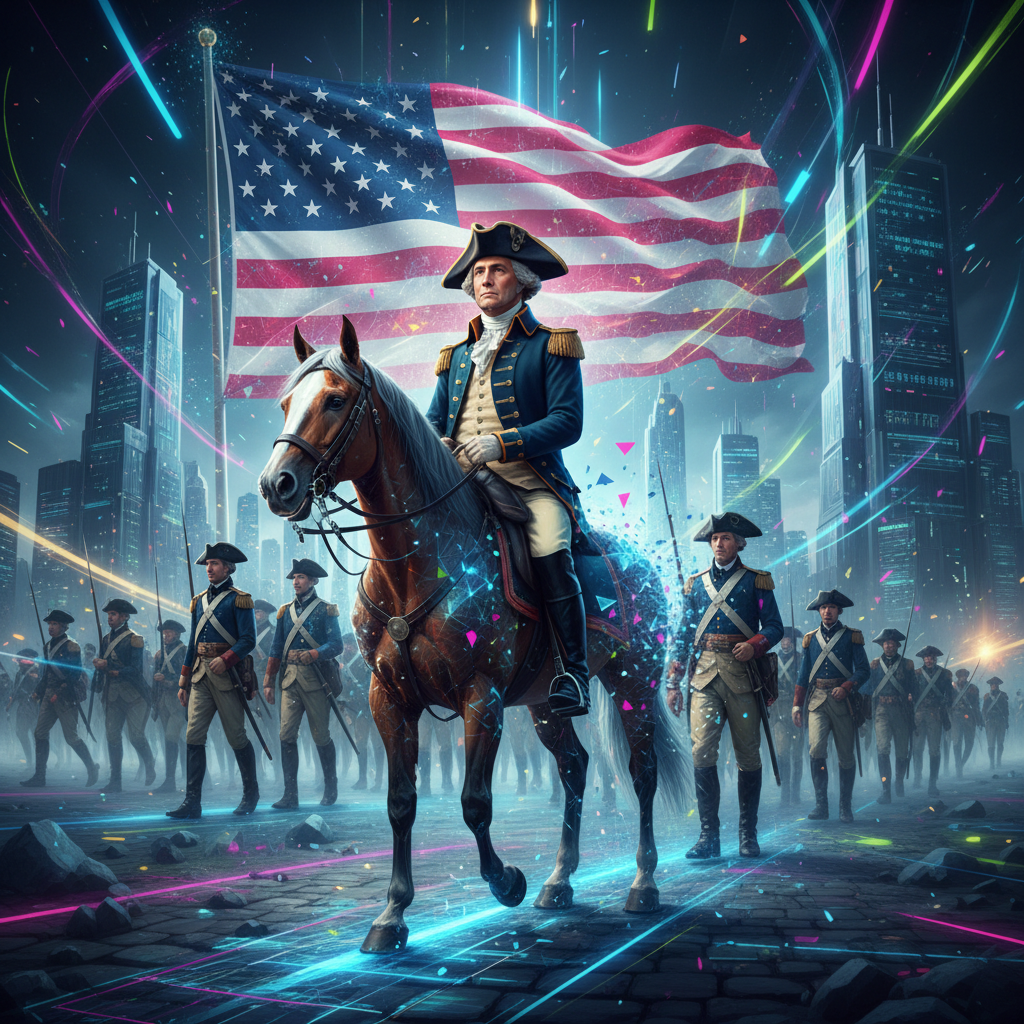
‘On This Day… 1776’ aims to recreate key moments of the American Revolution using AI generated content. The series, as the title suggests, will likely focus on specific dates and events that shaped the nation’s founding. Imagine witnessing the signing of the Declaration of Independence or the Battle of Bunker Hill, all rendered with the unique aesthetic capabilities of AI. The concept is both fascinating and potentially controversial, raising questions about the role of AI in historical representation. The series aims to transport viewers back to On This Day 1776, offering a fresh and innovative perspective on the events that unfolded.
The initial reactions to the Darren Aronofsky debuts AI generated series have been mixed, ranging from excitement about the innovative use of technology to skepticism about its historical accuracy and artistic merit. Some see it as a bold step forward in AI filmmaking, while others worry about the potential for AI to distort or misrepresent historical narratives. Regardless, the project has undoubtedly captured the attention of the film industry and the public alike, setting the stage for a fascinating exploration of the Aronofsky AI Revolution. This project forces us to consider the impact of AI on filmmaking industry and the ethical implications of using AI to recreate historical events.
On This Day… 1776: A Deep Dive into the AI American Revolution Series
‘On This Day… 1776’ promises to offer a unique perspective on the American Revolution. Rather than relying on traditional filmmaking techniques like live-action recreations or CGI, it leverages the power of AI to generate visuals based on historical data and artistic interpretations. The narrative structure will likely be episodic, focusing on specific events that occurred “on this day” in 1776. This format allows for a focused exploration of key moments and figures, offering a glimpse into the daily realities of the revolution. The AI generated American Revolution short films will provide bite-sized historical narratives, making them easily accessible to a wide audience.
The series is expected to portray a range of historical events and figures, from the drafting of the Declaration of Independence to the battles that defined the war. Key figures like George Washington, Thomas Jefferson, and Benjamin Franklin are likely to appear, reimagined through the lens of AI. Imagine seeing these historical icons rendered with a blend of realism and artistic interpretation, blurring the lines between history and imagination. The AI photo studio used may have allowed for the creation of photorealistic depictions or something more stylized. This blend of historical accuracy and artistic interpretation is what makes the series so intriguing. The historical AI series aims to bring these figures to life in a way that is both informative and visually captivating.
The visual style of the AI-generated imagery is one of the most intriguing aspects of the project. Unlike traditional historical depictions, which often strive for realism and accuracy, the AI-generated visuals may offer a more stylized and impressionistic interpretation. Think of it as a living painting, constantly evolving and adapting based on the AI’s algorithms. This unique aesthetic could potentially offer a fresh perspective on familiar historical events, challenging viewers to reconsider their understanding of the American Revolution. The use of an AI photo studio for this project offers possibilities for unique visual interpretations. For example, the AI could generate images that depict the emotional intensity of the revolution, rather than simply recreating the events in a realistic manner.
The potential impact of this series on how history is presented and consumed in the digital age is significant. If successful, it could pave the way for new forms of historical storytelling, making history more accessible and engaging for a wider audience. Imagine using AI to create interactive historical simulations or personalized learning experiences. This project could be a catalyst for innovation in the field of historical education and entertainment, but it’s also important to consider the potential risks and ethical implications of AI-generated historical content. The use of AI in historical education could revolutionize the way we learn about the past, making it more engaging and accessible to students of all ages.
The Power of AI: How Aronofsky’s Team Crafted the AI Generated Film
The creation of ‘On This Day… 1776’ relies heavily on advanced AI image generation techniques. The process likely began with feeding the AI vast amounts of historical data, including images, texts, and documents related to the American Revolution. This data serves as the foundation for the AI to generate new images that are both historically informed and visually compelling. The AI then uses algorithms to create images based on these prompts, refining them through iterative processes until they meet the desired aesthetic and historical standards. The AI filmmaking process involves a complex interplay between human creativity and artificial intelligence.
The specific AI tools and platforms utilized in the production are likely a combination of commercially available software and custom-developed solutions. Popular AI image generation platforms like Midjourney, DALL-E 2, or Stable Diffusion could have been used as a starting point, with Aronofsky’s team potentially developing custom algorithms to fine-tune the results and achieve a specific visual style. The AI photo studio software used would have been crucial in generating the visuals. The choice of AI tools would have depended on the specific aesthetic goals of the project and the level of control that Aronofsky’s team wanted to have over the image generation process.
The level of human involvement in the AI filmmaking process is a crucial factor in determining the project’s artistic merit and historical accuracy. While the AI is responsible for generating the visuals, Aronofsky and his team likely played a significant role in guiding the process, providing artistic direction, and ensuring historical accuracy. This collaboration between human creativity and artificial intelligence is what makes the project truly unique. It’s not fully automated; the director uses AI as a tool to realize his vision. Darren Aronofsky AI film making process is a testament to the power of collaboration between humans and machines.
The advantages of using AI in historical filmmaking are numerous. AI can significantly reduce production costs, allowing filmmakers to create visually stunning historical recreations without the need for expensive sets, costumes, and actors. The speed of production is also greatly enhanced, as AI can generate images much faster than traditional methods. Furthermore, AI opens up new possibilities for visual storytelling, allowing filmmakers to explore historical events in ways that were previously impossible. For example, AI could be used to create realistic simulations of historical battles or to visualize the daily lives of people living during the American Revolution. The best AI tools for creating historical films are constantly evolving, offering filmmakers new and innovative ways to bring history to life on screen. For a deeper breakdown, explore our AI Tools Guide to see how these compare in real-world use.
Ethical Considerations: AI, History, and the American Revolution Series
The use of AI to depict historical events raises several ethical concerns. One of the primary concerns is the potential for AI to misrepresent or distort historical narratives. AI algorithms are trained on data, and if that data is biased or incomplete, the resulting images may reflect those biases. It’s crucial for filmmakers to carefully curate the data used to train the AI and to be aware of the potential for bias. The AI generated historical content controversy is something that needs to be addressed. For example, if the AI is trained primarily on images that depict the American Revolution from a British perspective, it may generate images that are biased against the American colonists.
Another concern is the potential for AI to perpetuate harmful stereotypes. If the AI is trained on images that depict certain groups in a negative light, it may inadvertently reproduce those stereotypes in its generated images. Filmmakers must be vigilant in identifying and mitigating these biases to ensure that their AI-generated historical content is accurate and respectful. Ensuring accuracy and avoiding harmful stereotypes is essential. For instance, if the AI is trained on images that depict Native Americans as savage or uncivilized, it may generate images that perpetuate these harmful stereotypes.
The debate over the authenticity and artistic merit of AI-generated art is ongoing. Some argue that AI-generated art is not truly creative because it is simply mimicking human expression. Others argue that AI can be a powerful tool for artistic expression, allowing artists to explore new creative possibilities. Ultimately, the value of AI-generated art is subjective and depends on the viewer’s perspective. The impact of AI on filmmaking industry is undeniable, but the question of whether AI-generated art can be considered “true” art remains a topic of debate.
The implications for historical education and public understanding of the American Revolution are significant. While AI-generated series like ‘On This Day… 1776’ have the potential to make history more accessible and engaging, they also pose risks. If the series is not historically accurate or if it perpetuates harmful stereotypes, it could negatively impact public understanding of the American Revolution. It’s crucial for educators and historians to critically evaluate AI-generated historical content and to use it responsibly as a teaching tool. On This Day 1776 AI film review should consider the historical accuracy and potential biases of the series.
FAQ Section
1. What is ‘On This Day… 1776’?
‘On This Day… 1776’ is a new AI-generated series by Darren Aronofsky that depicts key moments of the American Revolution. It uses AI image generation techniques to create a unique visual experience, offering a fresh perspective on this pivotal period in American history. The series aims to bring history to life in a way that is both informative and visually captivating.
2. How does AI image generation work?
AI image generation involves training an AI algorithm on a vast dataset of images. The AI learns to recognize patterns and relationships within the data, allowing it to generate new images based on prompts or descriptions. These prompts can be text-based, image-based, or a combination of both. The AI then uses these prompts to create new images that are both realistic and imaginative.
3. Why is Darren Aronofsky using AI in filmmaking?
Aronofsky is likely using AI in filmmaking to explore new creative possibilities and to push the boundaries of visual storytelling. AI allows him to create visually stunning historical recreations in a cost-effective and efficient manner. The use of AI also allows him to experiment with different visual styles and perspectives, offering a fresh and innovative take on historical events.
4. What are the potential benefits of using AI in film production?
The potential benefits of using AI in film production include reduced production costs, increased speed of production, and the ability to create visually stunning and innovative content. AI can also be used to automate tasks such as editing, color correction, and visual effects. These benefits make AI a valuable tool for filmmakers looking to create high-quality content on a budget.
5. How can AI be used effectively for historical storytelling?
AI can be used effectively for historical storytelling by providing access to vast amounts of historical data, allowing for the creation of accurate and engaging visualizations, and offering new perspectives on familiar historical events. However, it’s crucial to ensure that the AI is trained on unbiased data and that the resulting content is critically evaluated for historical accuracy and potential biases. The AI generated historical content controversy highlights the importance of responsible use of AI in historical storytelling.